Wednesday, 25 August 2010

HALE STORM IN THIS YEARS BACKGAMMON CHAMPIONSHIP


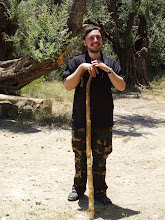
This was one of the strangest backgammon championships of Azogires history as father and daughter got first and second prizes.
It was a great success with 13 players from 9 diferent countries and over 30 spectators throughout the day. The competition was followed by a meal of lamb and potatoes in the oven served with salad and tzatziki and it was sponsored by David Hale and Martin Strellow both known professional players.
First prize winner was David Hale, second prize winner was Jessica Hale...Yes his daughter from England. The third prize winner was our one and only Sarkis from Lebanon, a man who plays with passion, not only in life, but also in backgammon.
This was the summer International Tournament in memory of Andrew Millar, one of the founders of the Azogires Backgammon championship. The cup was given to the Hales and they must return it next year for the next Champion to take home. The folks from the Alpha Cafe offered bottles of their very own raki as prizes to the winners, but as they declined to take them we gave them bottles of our very own Olive oil instead.
We wish everyone a good summer and hope to see you all on the next tournament in Azogires .


Wednesday, 14 July 2010

A STORY LONG AGO


The first photo above is my uncle Yannis Koutkoutsakis, the next is my grandfather Eftihis Koukoutsaki with me when I was 6 years old. The last one is my uncle Pavlos Koutkoutsakis.

It took me a while but I finally got the interview from my uncle Yiannnis Koukoutsakis, second cousin of my father, and he gave me an interview about something that took place somewhere between the Greek/ Italian war and World War II (1940 /1941). I have heard the story before from my grandfather but never in so much detail.
It all took place in the next village to Azogires where my family had a lot of land. There were shepherds with goats and the goats were feeding on the grass of our hillside and flat land around our family’s old flour mill (the area is still called Ton Koukoutsido o mylos which means Koukoutsaki family’s mill). It was a rather large area with much rich grass because it was along the two rivers that unite to make the one and only Azogires River, so it was not only the land along the river but the land between the rivers, like a little island. However, the shepherds that had these goats refused to pay rent for the land, therefore causing arguments between our family and theirs, so one afternoon my grandfather’s brother George, who was just a young boy at the time, went up and started to chase away the goats from our land.
At that moment the shepherds saw him and fired at him with their rifles. Naturally, when my uncle George returned home and told him the story, this outraged my grandfather. Without second thought my grandfather grabbed a weapon and a belt of bullets and ran off to the neighboring village. As he was on his way there his first cousin Pavlos Koukoutsakis, who is one of the main characters in this story, caught up with him. Pavlos who was also carrying a rifle, said to my grandfather,
“Are you mad going alone in to the snakes nest? They will kill you! I will come with you.”
When they entered the village, they went in blasting at every house, shooting at doors, windows, and anything that was not breathing; like clay a cups, flower pots etc. They demanded that the villagers tell them who shoot at George. Finally, after an hour or so, the villagers gave in and told them where they could find one of the shooters.
They went to where he was hiding, pulled him out and gave him the beating of his life, and told him that if he ever shot at a Koukoutsaki again he’d better be prepared to die. After getting the beating the shepherd regained his pride and stumbled of to the mountain. In the meantime my grandfather and uncle went out of the village and in to our land and chased away the goats. This took a short while giving the shepherds of the rival family time to recoup and get some guns together - which in Crete is not so difficult to do!
The shepherds climbed on a high position above the fields and started shooting down at my grandfather and uncle who took refuge behind some rocks and fired back. However, they could not see the enemy so my uncle decided he was going to make a run for the top of the hill and shoot at the shepherds from there. My grandfather loaded up and started shooting nonstop towards the hill, therefore giving my uncle a chance to reach his goal. Unfortunately my uncle made a mistake and by the time he reached the top, his rifle was empty: the shepherds had pistols so they shot him down. He was wounded and without his weapon, stuck behind a small rock but they still would not dare go near him. In the meantime, my grandfather could not move higher because he now was alone and outnumbered by the many shepherds who held the hilltop. So, he was stuck inside a crack and kept trying to get to higher ground but had no chance until other Koukoutsaki family members started firing their guns from Azogires, scaring of the rebel shepherds.
My uncle was brought home and died some days later. As long as he was alive his dog Vamvakia stood by his bed and refused to leave his side, she stood right next to him until he left his last breath. He then was buried in our family cemetery In the neighborhood Koukoutsiana, St John the hermit.
About an hour after they buried him, the dog, Vamvakia, went up to the grave and sat next to it howling and crying; she stayed there for days. My ancestors tried to take her away both by sweetalking her and by force, she but never allowed them to come near her, threatening and growling at them. They eventually left her alone but they thought to bring food and water to her and for days they tried to feed her and to make her drink water. However, she didn’t touch one drop of water and she didn’t eat one drop of food; she just sat there crying for uncle Pavlos until the day she left her last breath on his grave.
That’s when a young boy, my uncle Yiannnis, the person I am interviewing today and who was witness to these events, went up dug a hole right below the church yard and buried Vamvakia so that she will forever be with her master.
This story still shocks me even though I’ve heard it so many times, it’s still so hard for me to understand how far a dog will go for his master - even until this day we honor both uncle and dog both for making different sacrifices for their family and teaching us something very important; so important that its deep inside our heart.
Vamvakia was female dog, white in colour, which was the reason of her name, it means ‘cotton’.
This particular vendetta lasted for about ten years and led to many deaths and the uprooting of families. Several families who were shepherds and took part that day in the shootout against my family, were driven off, sold their land and houses and never came back, therefore ending this feud. But even we made a sacrifice; we sold our land in the next village to the neighboring landowners, even including the flourmill which I will write about another time.
Today we speak only about one thing MANS BEST FRIEND: SOMETIMES NOT ONLY IN LIFE, BUT ALSO IN DEATH.

Wednesday, 17 March 2010

2010 ANNUAL SPRING BACKGAMMON COMPETITION IN AZOGIRES


The Annual Spring Backgammon competition took place in Azogires on Sunday, 14 March.
We had new and old players, young and experienced, male and female, human and animal: all played for one reason or another. Even the locals got jealous and made their own little tournament on the side.
As for the animals, our very own Al Capone said to Petroula the Cat "Lets have a friendly game," and all was going smoothly until Capone caught Petroula cheating, and said "Enough is enough."
Then you can imagine that it was surely a cat and dog fight.
As for the real tournament, there were 16 players from 6 different Nations.
The game started around one pm and lasted over seven hours, at the end of which the winner was Anidri's very own David Hale with the second prize going to Sakis from Lebanon.
In the consolation tournament on the other hand, it was an all ladies game. First prize winner was Marjan De Jong from Holland and second prize winner was Morit Heitzler from Israel .
.

Friday, 5 March 2010

THE KOUKOUTSAKI FAMILY VINEYARDS BUILT IN LATE 1800S


A time long ago, in the late 1800s, my family decided to expand their investments in agriculture. (Remember, when we are talking about a family in those days we don’t just mean Mama, Papa with a son or daughter, we mean Mama, Papa, seven or eight sons and two or three daughters - or the other way around - not to mention that most of the sons would have been married also and they would have had several little brats running around also.) So, to get back to the subject, they needed more grapes.

In those days, it was not like today where you simply trample the grapes make wine and raki, it was a little more complicated then that. First you had to have grape leaves. They would stuff them to make dolmades, use them by placing them flat in the bottom of a cooking pot so it would not burn, feed their animals with them and also boil them to eat as something cold on the table, served up with a bit of olive oil.

Then you had the grape vines. These came useful for burning in the fire, for cooking something old and tough such as an old hen - simply by placing a few fresh vines inside the pot with the boiling hen make her soft and tender like a 3 month old chicken - and off course, they used to burn the vine wood to make charcoal for gun powder, another homemade item in those days.

Then you had the grapes themselves. Now these had many uses starting from when they were not ripe yet and tasted rather bitter, it was then when the Cretans would cut them and squeeze them in to food as a substitute for a lemon. Later when they were ready and ripe, the locals would make what you know as raisins and hang them inside the house beams to use as winter food supply - they would do this with any sort of grape even with those seeds inside. They would also make a table sweet with the grapes which they would store in large clay amphorae to give to guests when they came to the house.

When the grapes were ripe and ready they would be stamped or treaded, call it how you like; the grape juice being used to make wine, a sweet known as moustalevre and also grape jelly or marmalade. When they had got the juice, the left over grape skins, the pomace, would be used for making raki; in those days raki was mostly used for medical purposes, not for of drinking by the litre as many Cretans tend to do now. As you can see, owning a vineyard was like owning a supermarket and that is the reason the Koukoutsakis decided they wanted a bigger and better vineyard.

They found the perfect spot: perfect for defence against humans, animals and even birds, with a hillside on the bottom, a cliff on top and only two sides to look after. It took the whole family years of hard work to complete this project but they did it. According to our elders it took over 1500 work-days, from sun up to sun down; the man digging up stones then breaking them up, carrying to the site and using them to build the patios where the vines would be planted, the women going into the forest caves, digging out fresh fertilized soft soil which they would carry in a basket on their backs for as far as a half kilometre to fill the walls up in order to complete the patios. Slowly they built stone walls around to stop the invaders. They also built watch towers based on two small caves with magnificent views. In these, two man of the family would spend their nights during harvest season fully armed, like bank security guards, although grapes had more value then money since you eat grapes to survive. The men were ready to shoot and kill anything that moved, rabbits, badgers, humans and, of course, the large flocks of birds that came for the ripe grapes - although it was easier to capture the birds using flat stones or snares, thus saving ammunition for larger intruders.

In the top photo you can see the vineyards from across the way, from the opposite mountain.

In the next 3 photos you can see two of the patios and one of the walls that still stands today, not as tall as he was when first built, but still proud and strong.

The following four are the top watch tower and the bottom watch tower with their defence positions and their front patios where a man could catch some sun, then two photos of the view, the wonderful view, in which your eyes see what my ancestors eyes were seeing for over 100 years. The last four photos are the stones walls and patios that still survive today.

Even though it has been left to grow wild and for the sheep to graze on, the Koukoutsakis vineyard shall one day grow again and produce its magical wine. I could write so much more about the varieties they had growing, the names of the people whose vision it was, the modern day owners, what became of the vineyard and how and why it stopped to exist, the way of transportation and God knows what else…… but I think I’ll just leave it to your imagination!


Sunday, 14 February 2010

PALEOCHORA CARNIVAL


Sorry for not updating my blog for so long, I've been extremely busy doing absolutely nothing. Here are some photos of the Paleochora Carnival which I did not attend, so the photos are courtesy of the one and only Diane Meanock . Even though there were so many people in the crowd, she successfully managed to take these wonderful photos