Monday, 9 June 2008

A SUPRISE VISIT


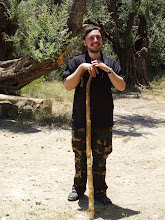
This week we had a suprise visit from the famous English author, artist and poet, Mr Sam Reed.

He is the author of the book "Fractured Dreams and Sunflowers" and he came to our cafe with his gang of friends to eat some chicken, drink some beer and enjoy the afternoon.


Tuesday, 3 June 2008

A PARTY FOR MR.MICK MCTIERNAN


Last Sunday all the friends came together to wish Mick McTiernan a good trip back home to the UK. He will trully be missed because he always has a way to make us smile.
We all wish Mick McTiernan a safe trip home and we hope to see him again. Next summer Mr.McTiernan, you always have a second home to come to AZOGIRES.
(Mick McTiernan is the good looking one with a white beard in the photos above, NOT one of the good looking ones with a black beard!)


Thursday, 15 May 2008

What's in a name?


Anagyris foetida L.

Bean Trefoil, Stinkstaur

Description: A small tree, 1-4 m in height with an unpleasant smell and yellow wood. Leaves 3-7cm, with trifoliate, stalkless leaflets, elliptic to lanceolate, smooth on upper surface, covered with pliant hairs on the underside. Papilionaceous flowers, large yellow, in short racemes of a few flowers only, with a standard petal 10-15 mm which bears a black blotch, and wings up to 20mm. Calyx bell shaped, hairy, with 5 teeth. Pod (legume) 12–20mm, asymmetrical with 3–8 large, reniform (kidney shaped) seeds, violet in colour.

Habitat: Edges of roads and fields, dry, limestone slopes.

Properties, Use: Poisonous! The legumes (seed pods), which resemble those of beans have deceived a large number of children who have been poisoned! The plant was once used as an emetic and purgative. According to Cretan tradition, Judas was hanged from its branches and for that reason it is worthy of contempt.


From: “Healing, aromatic and edible plants of Crete.”

Antonis Alibertis.

Mystis Publications, Heraklion


Why is it included in this blog?

Because the Greek version of the book doesn’t give the English name, Bean Trefoil, but rather gives the gives the plant its common Cretan name:

AZOGYRES

Friday, 9 May 2008

Spells against evil

Dried snakeskin and piece of bread!

Dried bat kept in the wallet of an Azogires inhabitant


Up until relatively recently there were in use in Azogires a number of different ways to make sure that no harm came to a house or an individual. It goes without saying that few, if any of these are currently in use!


Dried Bat
Take small bat and kill it. The sun dry it flattened by a heavy piece of glass or a flat stone, but make sure the head is pointing to the west. Bury it on a crossroad for 40 days and 40 nights. Keep it in your pocket to keep off evil magic and spells, illness, diseases and the evil eye…the bat is a survivor.


The Snake
Collect the cast off skin of a snake and keep it in your house in the dark; add a small piece of bread to the container or packet in which you keep the snake skin.
This protects from witches, they cannot perform magic in the presence of the snake skin and it protects against evil spells.


Bulbs.
The bulb of a asphodel will keep away evil; keep it in a house or stake it on a fence; keep in the shed where sheep are milked. Keeps evil away.


Garlic
Hang it over the doors to keep bad people away STIHIA - lost spirits that come to drain your strength and energy.


Fishing net
Take a new small gauge fishing net and put it in the sea and let 40 waves wash over it. Then sew it into your clothing or hang it over your door to protect from witchcraft, disease, illness. The net catches the evil in the same way it caches fish in the sea. Some people shake it to get rid of the evil.


Evil Eye. Gitia
Your godfather will give you a pendent of a blue stone - the eye - to keep away the evil eye. It is said that people with joined up eyebrows can cast the spell even without knowing it and can hurt you even without meaning to; even a complimentary comment from them can harm. The stone forms a protective barrier with the good eye fighting the bad eye.
The knowledge of the spells used to banish the evil eye is known to a Gitia master who can be either a man or a woman. However, this knowledge cannot be passed on to a member of the same sex.
A Gitia master who knows the spell to get rid of the evil eye will take a piece of very light silk cloth leave it on your chest for 5 mins. or so. He or she will then make a knot in it, place the length of their arm on the cloth and make another knot there, cross you with it and then speak the spell. They will then put the cloth back on the table and place their elbow on the knot. If the cloth then extends beyond the Gitia masters forefinger, you have the evil eye; the length of the extension in figures indicates how powerful the spell cast on you is.
To discover who cast the evil eye, the Gitia master will take a bowl with water in it and drop olive oil into it. The pattern made by the oil will divulge the name of the caster of the spell.


Charcoal cross.
Go into the kitchen, turn round bend over pick up your shirt and get a woman to put a cross on your back with charcoal from the pan.

Sunday, 27 April 2008

Early Easter!


Easter Sunday came two hours early to Azogires when the Easter midnight celebrations being held at 9.30 pm on Easter Saturday!

The reason for the early arrival was that the priest, Papa Eftixis, had to do another 10 or so services in the surrounding villages that evening and had to start early and finish late to fit them all in.

The church of the Holy Fathers was full with about 50 people as the bell was rung to start the 30 minute service. The service came to an end with the announcement “Christos Anasti” (Christ is risen), the lighting of the Easter candles and a procession three times round the church.

After the procession, and as the service was continuing, an effigy of Judas was burnt in the courtyard outside the Monastery to the accompaniment of some very loud fireworks.

At the end of the service the Lenten fast was broken in the Alpha Kafenion with a traditional meal of sweet cake, hard boiled eggs dyed red, kalitsunia and Mageiritsa – a delicious soup made from the intestines of sheep or goats!

First of the summer wine?


The first of the summer’s backgammon (Tabli* in Greek) competitions took place at the Alpha Kafenion on Sunday 13 April.

In spite of disruptions from bus loads of Paleochorian school children and a passing Cretan shoe salesman who was seeking compensation for damage done to his Aunt’s crops by New Zealand troops hiding amongst them in 1941, (another story for another day) a full complement of 8 or so players spent a pleasant summer afternoon.

One of the highlights of this particular tournament was the participation of young blood in the shape of 11 year old James Webster (shown above). In spite of, or because of, his youth, he didn’t manage to make it to the final rounds but even so did perform very well, beating 2 much more experienced players before being eliminated himself.

The overall winner was David from Anidri, with Suzanne from Germany second and Canadian Pete third.

It’s not recorded where Lucky finished.


* Tabli…a fascinating game to play but one which as a spectator sport is up there with watching paint dry.

Monday, 14 April 2008

The Priest's Vinyard


If you take the road over the mountain from Azogires to Asphendiles, about 3 Km after the turn outside Azogires, and shortly after you’ve gone around to the Asphendiles side of the mountain, down in the bottom of the valley on your right hand side you will see what appears to be the remains of a large building.

In fact these are the remains of a vineyard constructed by Pater Papagregorakis, the miracle working priest of Azogires.

The long wall facing you was the mountain perimeter wall and the thicker wall at right angles to it on the right hand side of the ruins marks the end of the priest’s land in the valley. The square ruins on the left hand side are the remains of the watch keeper’s building – apparently it was not unknown for people to try and steal the grapes!

The vineyard was apparently in use up to the 1950s but now is just used for goats and sheep.